
Applications
• Energy Storage Devices
- Fuel cells
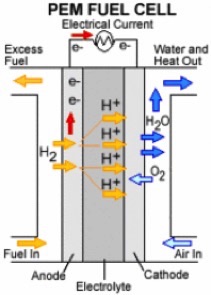
Fuel cell systems have been somewhat languishing in public interest after a flurry of investigations in the late 1990‘s. However, there are still niche applications for these energy delivery devices. Although low temperature Proton Exchange Membrane (PEM’S) fuel cells have been receiving less attention. mid-temperature Solid Oxide Cells (SOFC’s) are very much in vogue. Direct Methanol Fuel Cells (DMFC’s) are also of interest.
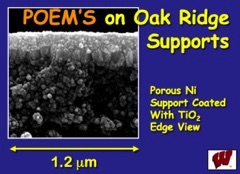
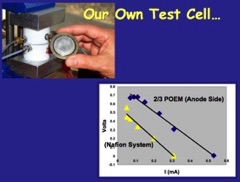
We became intrigued with fuel cells due to our ability to once again produce very thin-crack-free ceramic membranes that could conduct protons much in the same fashion as Nafion membranes. However, our membranes are ten times thinner and therefore did not show nearly as large as a membrane resistance. We called these materials Porous Oxide Electrolyte Membrane (POEM) fuel cells. Some of these concepts are now being used in our latest ultracapacitor system.
These POEM materials may also be useful in DMFC applications due to their inorganic nature preventing methanol cross-over problems so prevalent in the case of Nafion organic membranes. They may also be suited to higher temperature Solid Oxide Fuel Cells (SOFC’s).